


Legends and Myths of Armenia
 07 Jan, 2026
 9-11 min
 958 times
Rating: 5
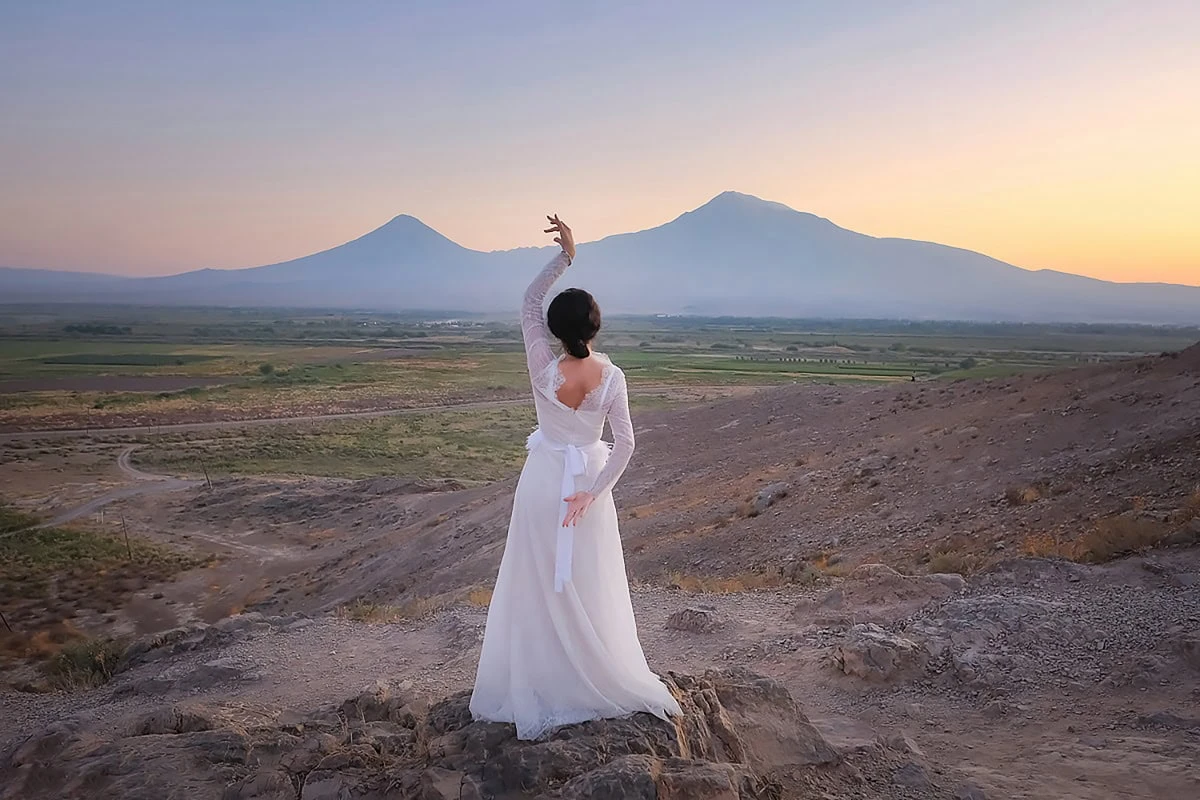
Armenia is often called an open-air museum, a land of monasteries and mountains. Yet beneath this familiar image lies another Armenia shaped by myths, legends and stories handed down through generations.
Come with us to explore the legends and myths of Armenia's mountains and temples and see how these tales still shape the way Armenians view their homeland today.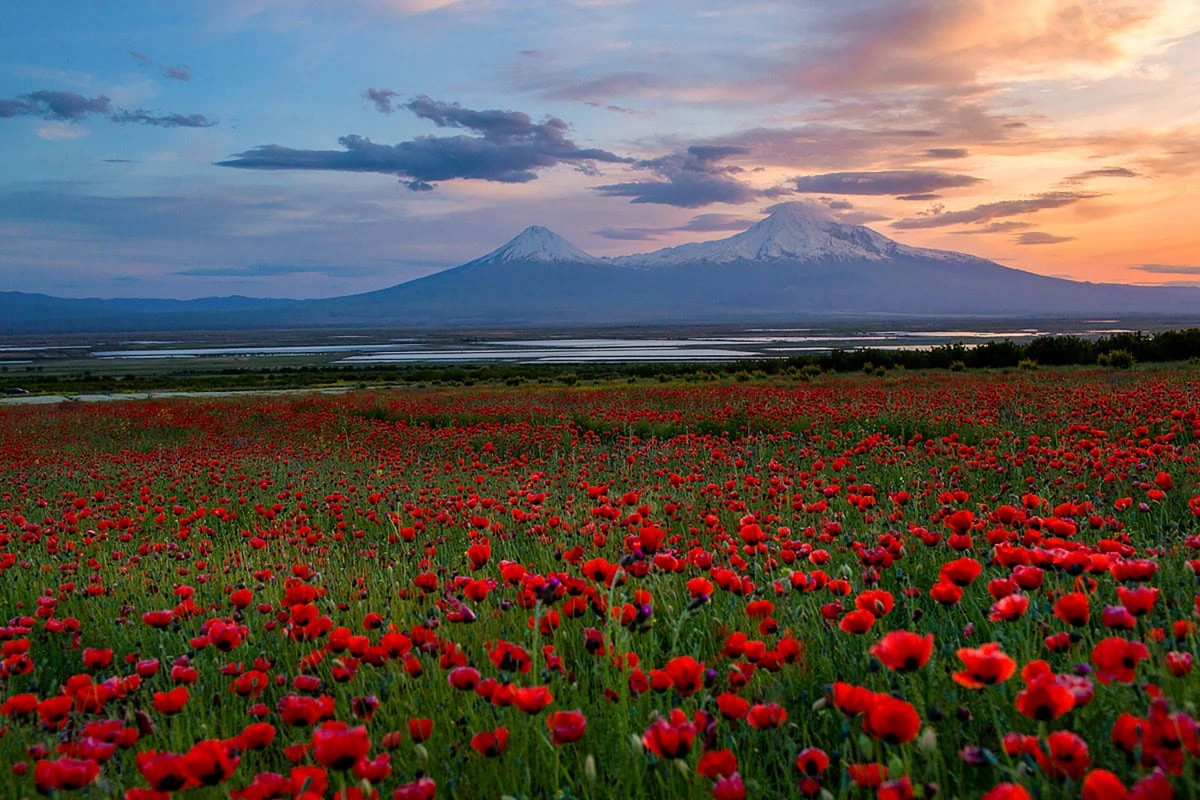
Traveling through Armenia means entering a land where stories are part of the landscape itself. Mountains hold epic tales, lakes recall ancient symbols and divine acts, while monasteries preserve miracles and relics that shaped the nation's faith.
To experience Armenia fully, look beyond the stones and scenery and listen to the legends connected to them. Each site carries a voice from the past, adding depth to the journey and meaning to what you see. Bring curiosity and imagination and let Armenia's myths guide your path.
Every peak, stone and monastery holds a story that recalls a time when history and myth were inseparable.
The mountains guard ancient secrets, while the temples preserve legends that continue to echo through the centuries. For travelers, these stories bring new layers of meaning to every site, turning ancient walls and landscapes into voices from the past.Come with us to explore the legends and myths of Armenia's mountains and temples and see how these tales still shape the way Armenians view their homeland today.
Mount Ararat: The Biblical Symbol
No symbol represents Armenia more strongly than the magnificent Mount Ararat. According to the Bible, it is here that Noah's Ark came to rest after the floodwaters receded and from here humanity began anew. For Armenians, Ararat embodies hope and rebirth. Its double peaks (one higher, one smaller) are often seen as a symbol of parent and child, reflecting Armenia's resilience and continuity.
Even though Ararat lies just across the border in modern-day Turkey, it dominates the Armenian horizon and its snowcapped silhouette is deeply ingrained in the nation's identity.
Mount Ararat
Travel Tip: The most iconic view of Ararat is from Khor Virap Monastery, where the mountain rises dramatically behind the ancient church. In Yerevan, rooftop cafés offer beautiful views as the peaks turn shades of pink and purple.
Did you know? Ararat is featured on Armenia's national coat of arms, highlighting its cultural and spiritual importance.
Mount Aragats: The Four Peaks of Light and Shadow
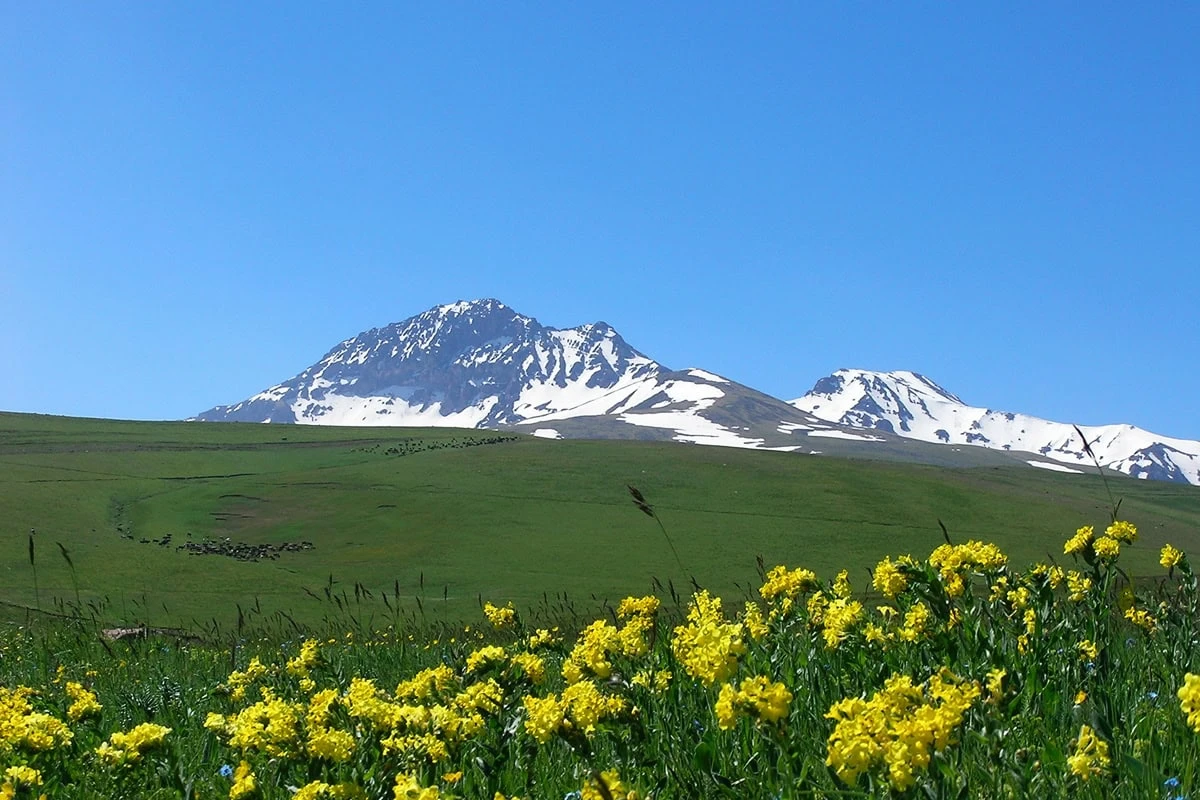
Mighty Mount Aragats, Armenia's tallest mountain, has long been wrapped in myth. One story tells of Mount Ararat and Aragats as brothers, blessed differently by fate. Ararat received vineyards and fertile lands, while Aragats, filled with jealousy, remained barren. Another tale sees Aragats' four peaks as symbols of a struggle between light and darkness.
At its summit, legend says, the mountain's tears form springs that feed the rivers below. To Armenians, Aragats is both a challenge to climb and a reminder of life's balance between hardship and beauty.
Mount Aragats
Travel Tip: Aragats is a popular destination for summer hikes. On its slopes you'll find Amberd Fortress, dating back to the 7th century and the small but beautiful Vahramashen church. Both stand as silent witnesses to centuries of legend and history.
Did you know? In Armenian, "Aragats" means "throne of Ar[a]", often linked to Ara The Beautiful, a legendary king whose story intertwines with Armenia's mythology.
Lake Sevan: The Sleeping Waters
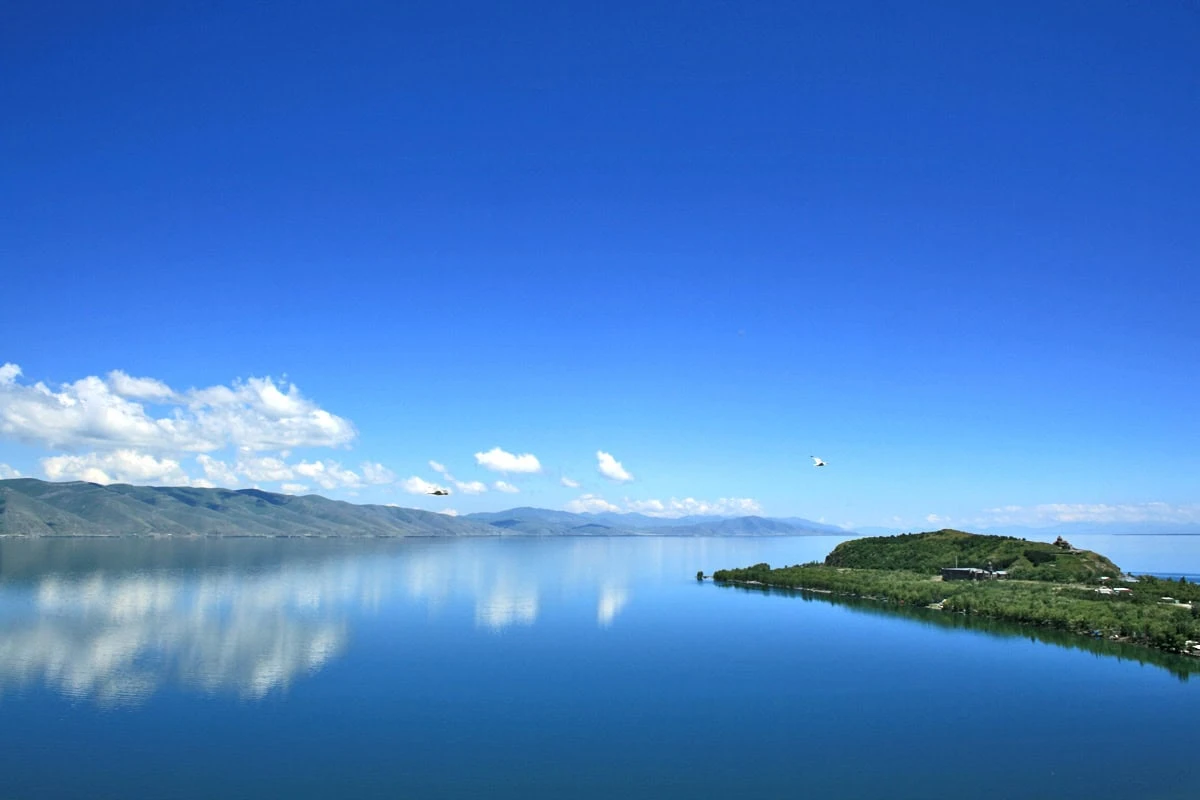
High in the Armenian mountains lies the jewel of Armenia – Lake Sevan. Its legend begins with a forgotten spring. Long ago, the valley was fertile and full of life, but when a young girl left the spring gate open, water burst forth, drowning the land and creating the vast lake.
Today, Sevan is called the "Blue Pearl of Armenia", its waters shifting in color with the sky – from deep turquoise at noon to silver and gold at sunset.
Lake Sevan
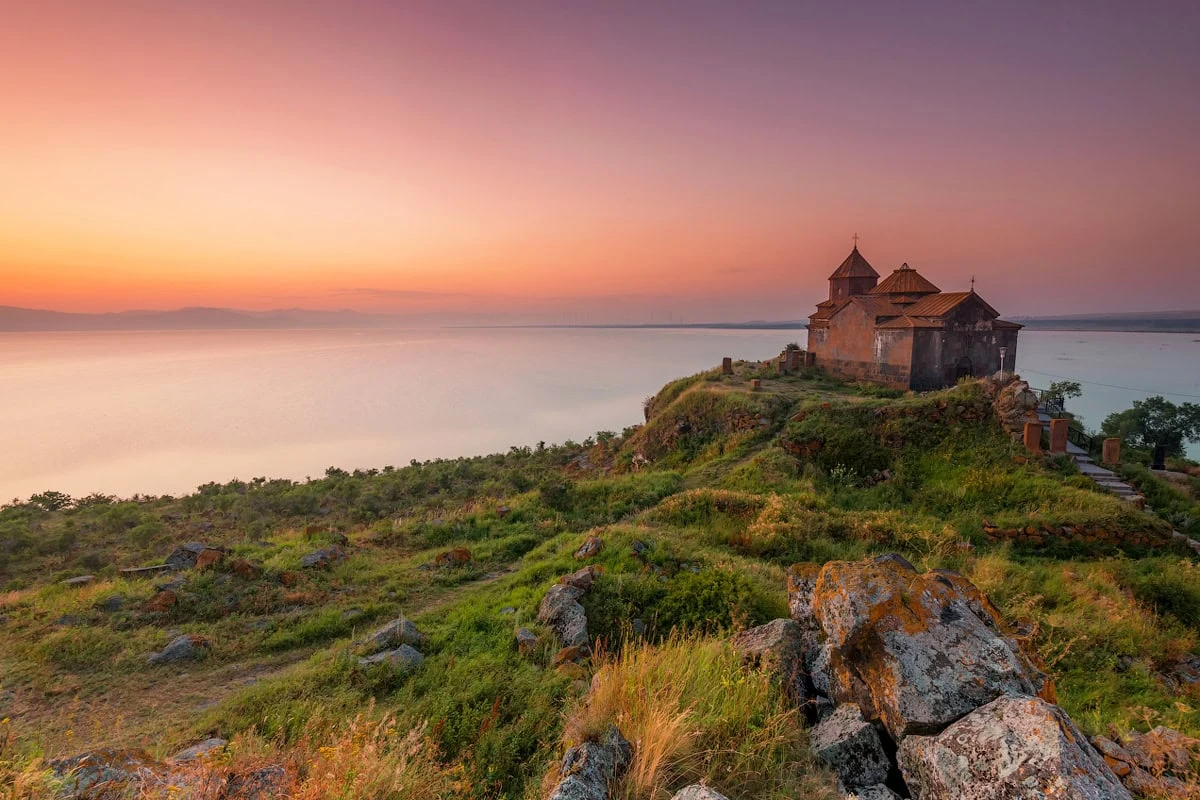
Travel Tip: Visit Sevanavank Monastery, standing on a peninsula that was once an island in the lake. The views from here are especially impressive at sunset, when the water glows with warm colors.
Did you know? At nearly 2000 m above sea level, Sevan is one of the largest high-altitude freshwater lakes in the world.
Hayravank Monastery: The Miracle of the Doves
During Tamerlane's invasion of Armenia, the ruthless conqueror fell seriously ill. A priest from Hayravank offered to heal him on one condition: Tamerlane would free as many captives as could fit inside the monastery and then leave Armenia. The conqueror agreed and the priest restored his health. When the moment came to release the captives, a wonder occurred – 70.000 prisoners entered the monastery but emerged as doves, flying back to their homes. Witnessing this miracle, Tamerlane was struck with fear and abandoned Armenia forever.
Hayravank Monastery
Travel Tip: Hayravank Monastery offers breathtaking views of the "Blue Pearl of Armenia". Visit at sunset, when the glowing sky mirrors the colors of legend.
Did you know? "Hayravank" means Monastery of the Father and its simple yet powerful stone church dates back to the 9th century.
Noratus Cemetery: The Valley of a Thousand Khachkars
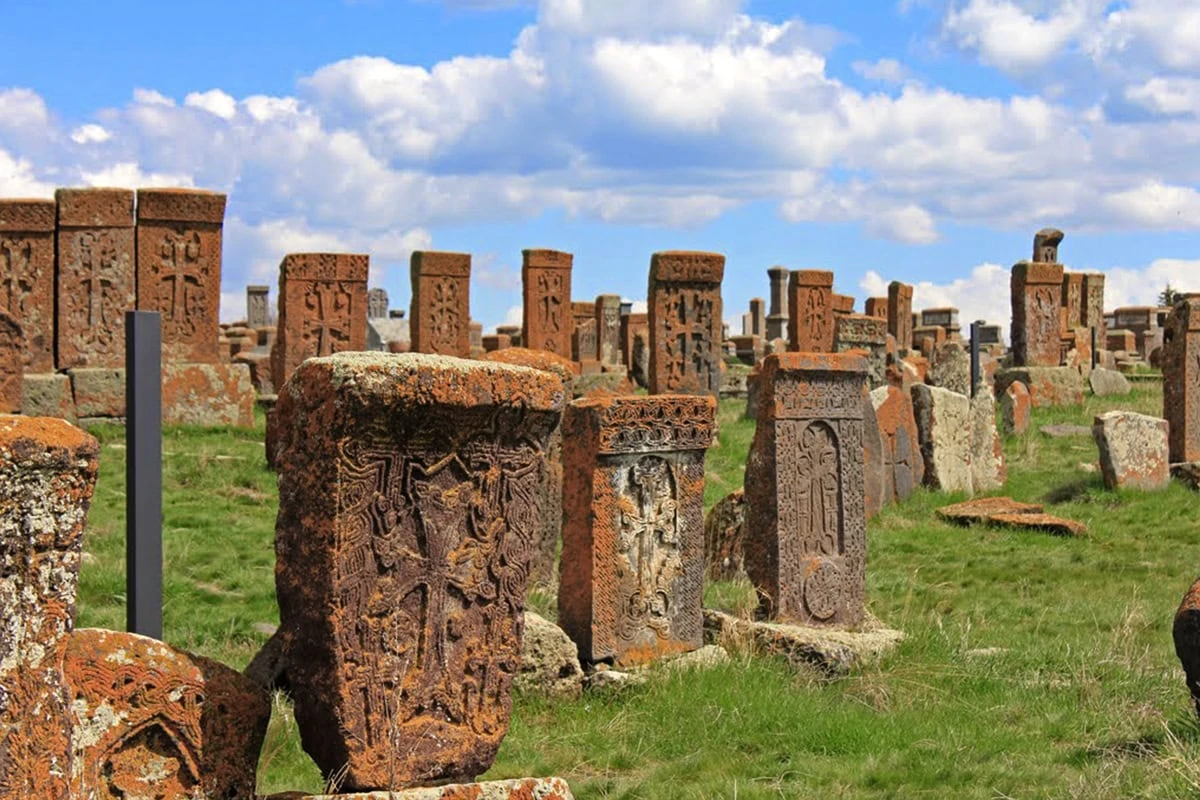
On the windswept shores of Lake Sevan lies Noratus, the largest collection of khachkars (cross-stones) in the world. Rows upon rows of these intricately carved stones stretch across the landscape, each one a silent prayer etched in stone.A local legend tells that when the conqueror Tamerlane advanced into Armenia, the villagers placed helmets on the khachkars. From afar, the stone crosses looked like a vast army of soldiers. Fearing he was outnumbered, Tamerlane turned back, leaving the village unharmed.
Noratus Cemetery
Travel Tip: Visit the cemetery at sunset, when the golden light brings out the delicate carvings on the stones and the whole field seems alive with memory.
Did you know? Armenian cross-stones art is included in UNESCO Representative List of the Intangible Cultural Heritage of Humanity, honoring their artistry and spiritual symbolism.
Garni Temple: Pagan Echoes of the Sun of God Mihr
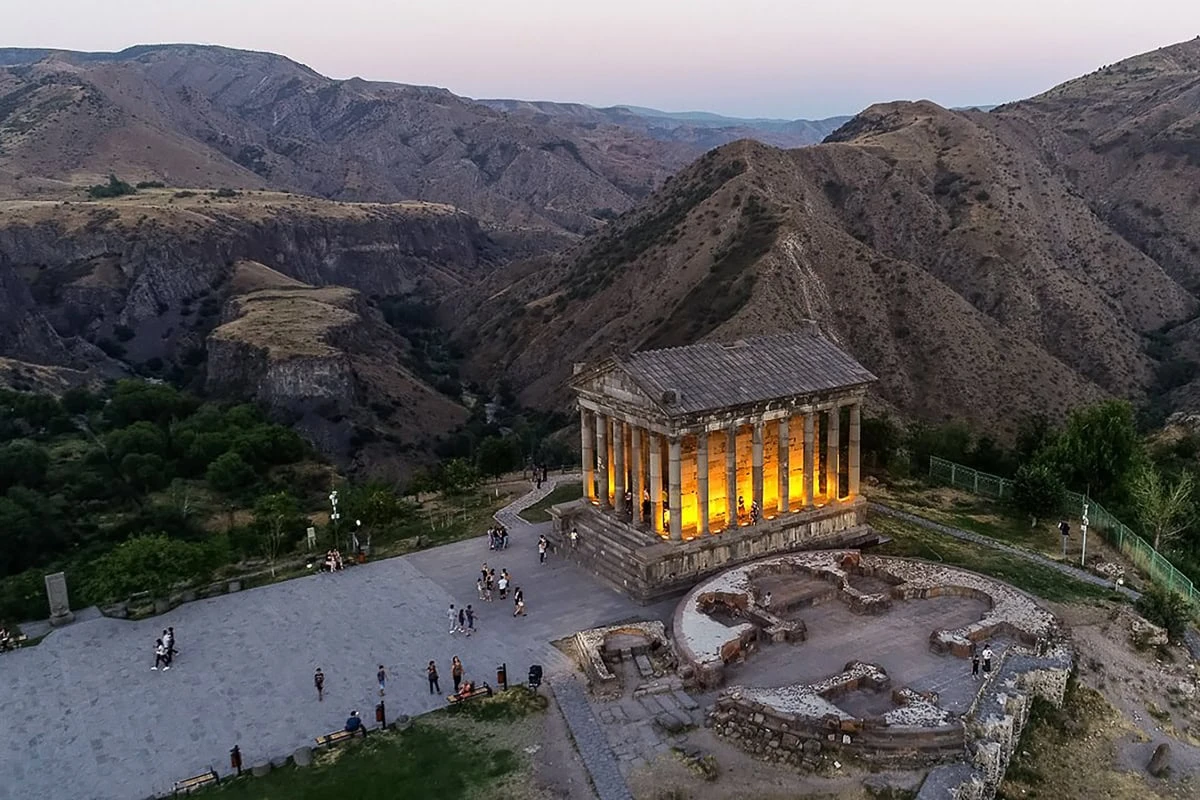
Before Armenia became the first nation to adopt Christianity, it was a land of pagan gods and sun-worshippers. The Temple of Garni, built in the 1st century AD, was dedicated to Mihr, the god of light, truth and the sun. It is the only standing Greco-Roman style temple in the entire region.Legend says, that while most pagan temples were destroyed after Armenia's conversion to Christianity in 301 AD, Garni was spared because it served as a royal summer residence. Its columns still stand tall against the sky, recalling a world that once flourished here.
Garni Temple
Travel Tip: Combine a visit to the temple with a walk into the Garni Gorge, known as the "Symphony of Stones". The gorge's basalt cliffs resemble a giant organ, forming one of Armenia's most unique natural sights.
Did you know? The temple collapsed during an earthquake in 1679 but was reconstructed in the 20th century using original stones.
Tatev Monastery: The Flying Monk's Miracle
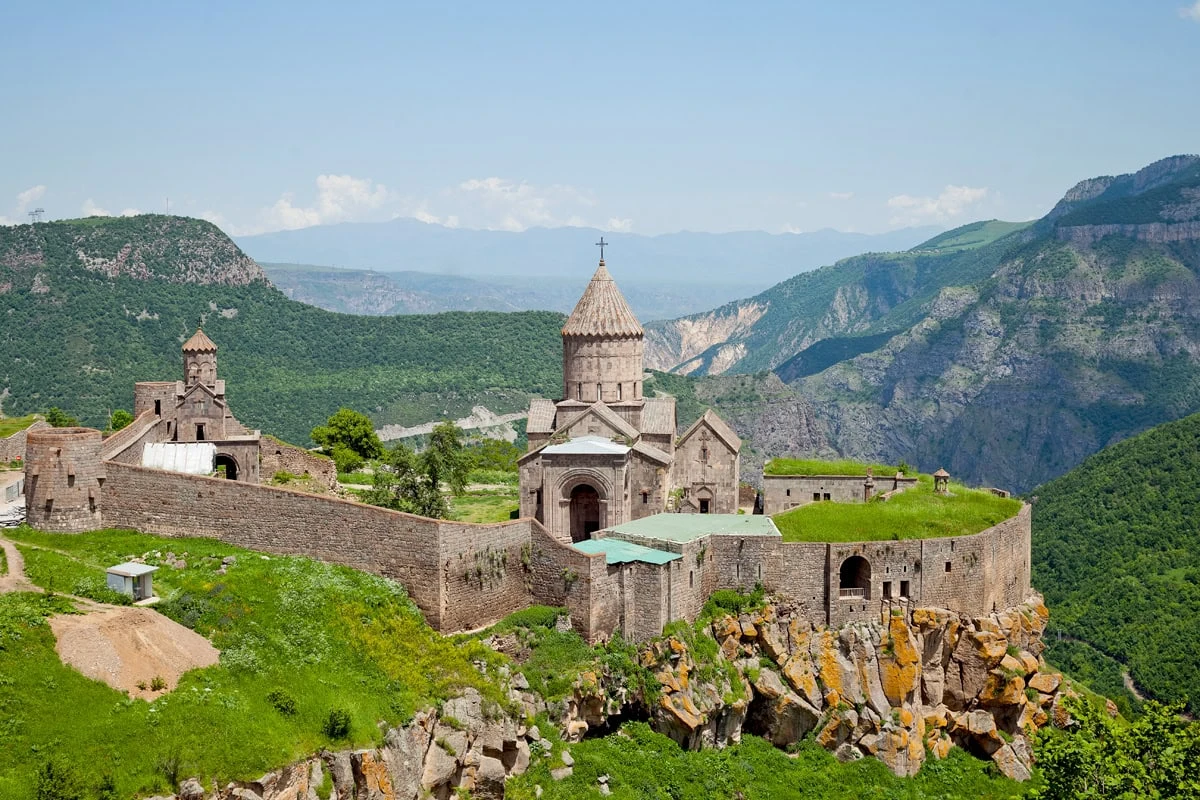
Standing on the edge of the Vorotan Gorge, Tatev Monastery has drawn travelers and pilgrims for over a thousand years. Its name is tied to a miracle: a monk, praying for divine help during construction, leapt from the cliffs crying: "Ta tev!" – "Give me wings!" According to legend, he was carried to safety and the monastery gained its name.
Tatev became a spiritual center and one of the oldest universities in the region, teaching science, philosophy and art. Here, faith and learning developed side by side.
Tatev Monastery
Travel Tip: Getting to Tatev is an experience in itself. The Wings of Tatev cable car, the world's longest reversible line, glides nearly 6 km above the Vorotan Gorge and offers spectacular views along the way.
Did you know? The monastery houses a unique "Gavazan" pillar – a swinging column that moved during earthquakes, alerting monks to danger. Locals called it a "miracle of engineering".
Geghard Monastery: The Spear of Destiny
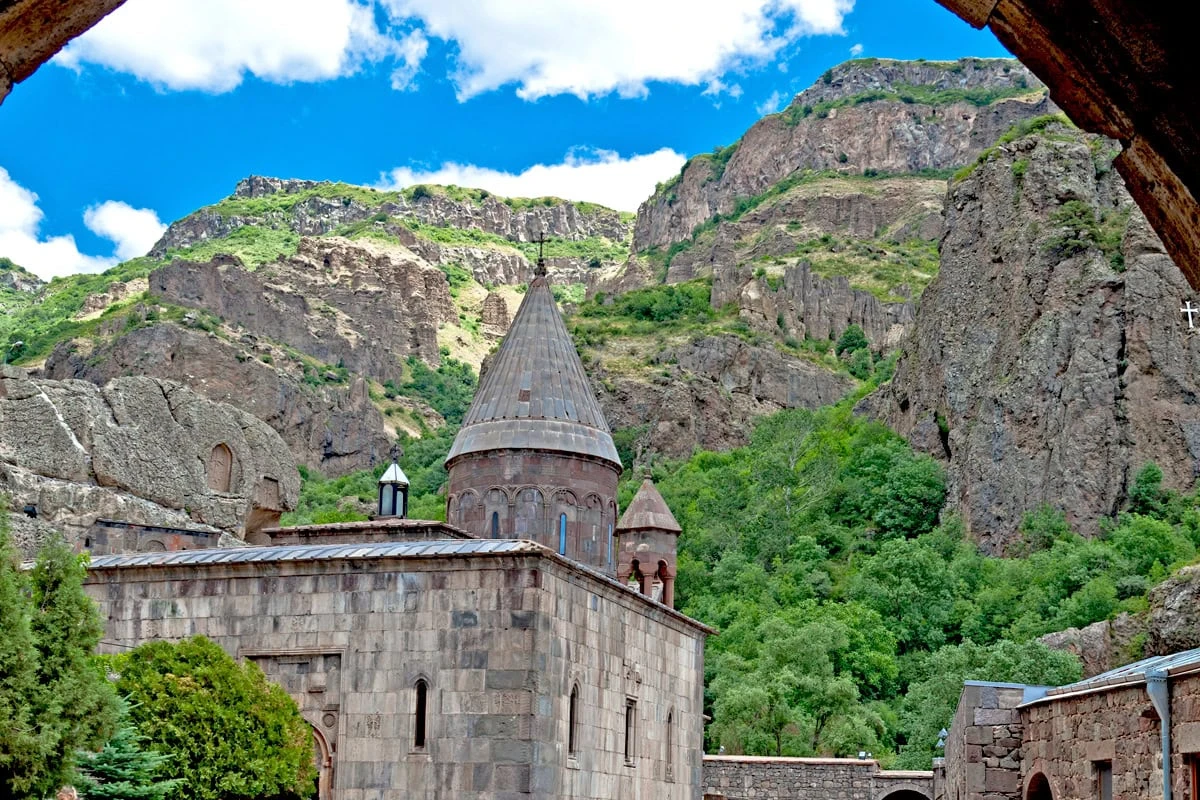
Few places in Armenia bring history and legend together like Geghard Monastery. Its name means "spear" referring to the Holy Lance said to have pierced Jesus Christ's side at the Crucifixion. According to tradition, the spear was brought to Armenia by the Apostle Thaddeus and kept at Geghard for centuries, making it a major place of pilgrimage.
Carved partly into the mountains, its rock-hewn chapels have an atmosphere that feels both sacred and mysterious. When choirs sing here, the acoustics amplify the voices until it seems the stone walls themselves are carrying the sound.
Geghard Monastery
Travel Tip: Many tours combine Geghard Monastery with Garni Temple in a single day. It's an easy way to explore Armenia's Christian heritage and its pre-Christian past together.
Did you know? While the original spear is now preserved at "Treasures of Etchmiadzin" Museum, Geghard remains a UNESCO World Heritage site for its remarkable mix of architecture, history and legend.
Traveling through Armenia means entering a land where stories are part of the landscape itself. Mountains hold epic tales, lakes recall ancient symbols and divine acts, while monasteries preserve miracles and relics that shaped the nation's faith.
To experience Armenia fully, look beyond the stones and scenery and listen to the legends connected to them. Each site carries a voice from the past, adding depth to the journey and meaning to what you see. Bring curiosity and imagination and let Armenia's myths guide your path.

Related services


-
 02 Feb, 2026
7-9 min
1148 times
02 Feb, 2026
7-9 min
1148 times
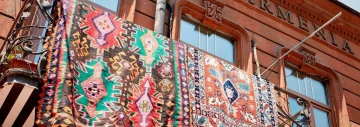
Armenian Carpets: History and Symbolism of Patterns
Carpet weaving in Armenia is a tradition that stretches back thousands of years. Each carpet is a canvas of colors and motifs, carrying the memory of families, regions and beliefs. Patterns that may look decorative to the casual eye often carry meaning, from wishes of prosperity to symbols of protection. Culture & Holidays Shopping & Souvenirs -
 26 Feb, 2026
11-13 min
1519 times
26 Feb, 2026
11-13 min
1519 times
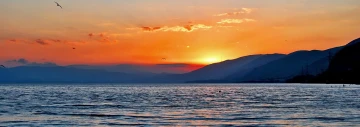
Lake Sevan: the pearl of Armenia – a complete recreation guide
Sevan is often called the Armenian sea, and this is not just a beautiful metaphor. The huge high-altitude lake occupies almost one fifth of the country's territory and is so vast that on its shores it is easy to forget that you are not by the sea. There is special air here, constantly changing water colors, and a sense of openness that you do not expect in the mountains. In summer people come here to swim and sunbathe, in autumn to walk along the shore and watch the sky reflected in the water, and in winter the lake turns into a picture painted by ice and wind. This guidebook brings together all the answers: how to get there, where to stay, what to taste, and which routes to choose so that a vacation at Lake Sevan will be remembered for a long time. Nature & Adventures Family & Wellness Getaways -
 13 Mar, 2026
5-6 min
623 times
13 Mar, 2026
5-6 min
623 times
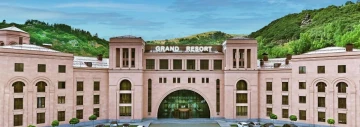
The best hotels in Armenia 2026: a complete guide to luxury holidays from Yerevan to the mountain resorts
Armenia is gradually becoming part of the global premium tourism map. Just ten years ago there were only a few international-level hotels here, and today the country is confidently competing with European resorts. And it does so in its own way: here, luxury is never separated from culture and nature. In this guide, we have gathered the best hotels in Armenia for 2026 – from Yerevan's urban palaces to mountain eco-retreats. Family & Wellness Getaways
Armenia
-
Travel Guide
Planning a trip to Armenia? At Hyur Service, we believe every traveler arrives as a guest and leaves as a friend. To help you navigate your adventure with ease, we've gathered the most essential tips, local secrets and practical answers to the questions travelers ask most often – from visas, safety and transportation to food, culture, costs and the best places to visit. For specific details on how to book our tours, payment methods and reservation policies, please visit our Frequently Asked Questions (FAQ) page. Whether you are searching for the perfect view of Mount Ararat, wondering where to find the best local khorovats, or simply want to know what to expect before you arrive, this guide is designed to help you plan with confidence and explore Armenia like a local. -
Attractions & Activities
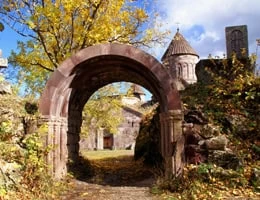
Explore the best places to visit in Armenia with one guide to the country's top attractions and activities. From Yerevan sightseeing, Garni Temple, Geghard Monastery, Lake Sevan and Tatev Monastery to waterfalls, mountains, museums, wine experiences and UNESCO-listed sites, this page helps you discover both must-see landmarks and lesser-known gems across Armenia. Use the filters to browse by region, category, distance from Yerevan, popularity and admission fee, then check opening hours, ticket prices and map location to plan your trip and build your itinerary with ease. -
Restaurants & Clubs
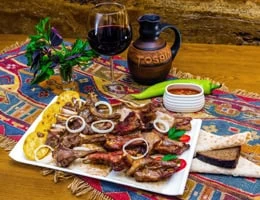
Discover the best restaurants, bars and clubs in Armenia in one guide to the country's top dining and nightlife venues. From traditional Armenian cuisine and cozy restaurants in Yerevan to wine houses, cafes, beerhouses and stylish spots across the regions, this page helps you find where to eat, drink and enjoy a memorable night out in Armenia. Use the filters to browse venues by region, type, cuisine and amenities, then check working hours, address and map location to plan your culinary experience with ease. -
Festivals & Holidays
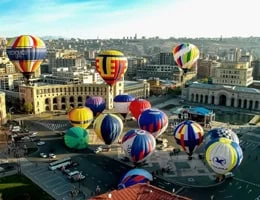
Festivals, holidays and cultural events are among the best ways to experience Armenia's traditions, food and local spirit throughout the year. From "Yerevan Wine Days", Yerevan Color Festival and music events to berry festivals, harvest celebrations and other local traditions, this page helps you find the most interesting festivals and events across Armenia and choose the best time for your visit. Browse by date and check practical details such as location, event date, start time and participation fee to plan your trip with ease.