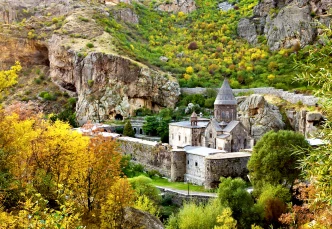
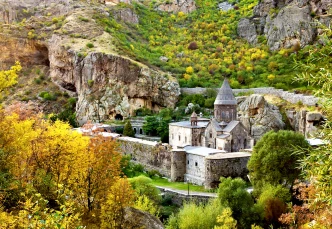
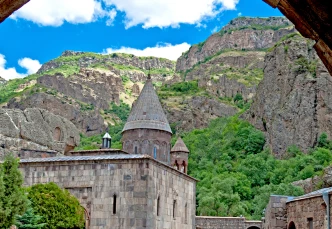
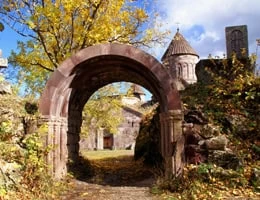
Amid the wild cliffs of Kotayk Gorge, where the wind carries the scent of stone and pine, the Monastery of Geghard appears as if the mountain itself had carved a sanctuary for eternity. Its walls, half fortress and half cave, rise from the rock like a prayer solidified in stone. Here, silence is alive, filled with the soft echo of centuries-old hymns.
In the 12th-13th centuries, monks shaped a world unlike any other. They dug churches and cells straight into the mountainside, creating a hidden realm first known as Ayrivank, the "Cave Monastery". Later, the site took the name Geghard the "Spear" in honor of the sacred relic said to have pierced Christ's body.
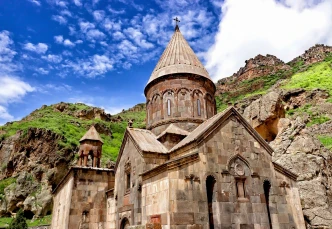
The ensemble is a dialogue between earth and heaven: the main Katoghike Church, its shadowed narthex, the secretive cave chapels, a small oratory and the Church of the Holy Mother of God, the eldest of the stones. The cool halls cut into the heart of the mountain feel alive, keeping the breath of pilgrims who once arrived barefoot, whispering prayers into the darkness. Among the rock-cut monasteries and cells, medieval Armenian heraldry stands out, demonstrating the power of Armenian princely families, the charm of palace architecture and dazzling weavings and ornaments long before the Renaissance.
Today, Geghard is not just a monument on the UNESCO World Heritage List – it is a living miracle. Step through the rock-hewn archways and time bends. Shafts of light slip through narrow openings, turning the cavern walls to gold and for a heartbeat, the earthly and the divine are one.