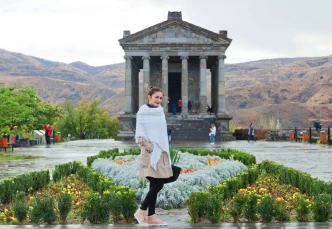
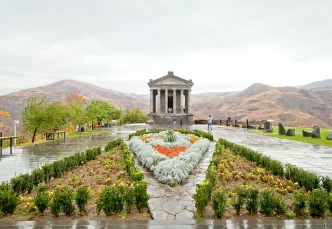
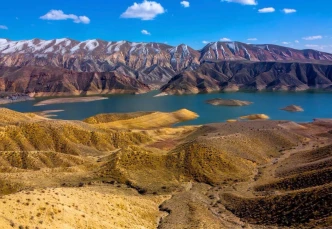
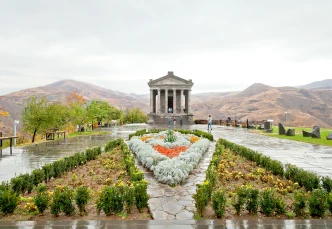
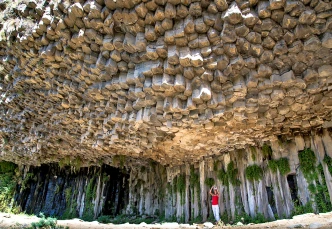
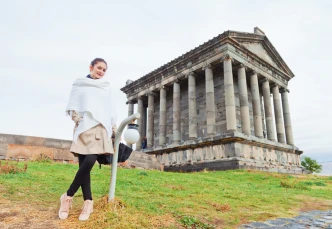
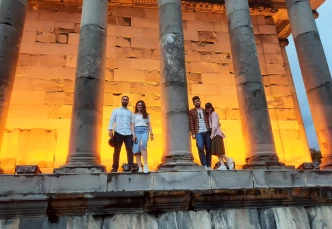
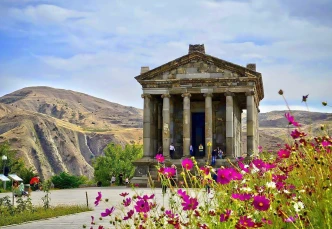
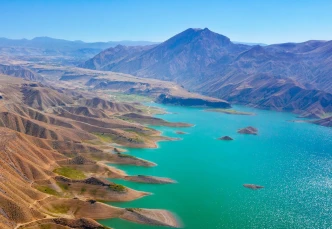
On the edge of a triangular cliff, high above the roaring waters of the Azat River, rises the pagan temple of Garni – the sole guardian of Armenia's classical heritage that has survived the centuries. Its elegant columns, turned toward the sun, seem to continue their silent homage to Mihr, the solar god to whom the temple was dedicated.
In the 1st century AD, King Tiridates I ordered a sanctuary to be built here, from which endless views of mountains and gorges unfolded, as if the Sun itself blessed these lands. When Christianity reached Armenia, the ancient rites fell silent and Garni became a royal summer residence, where the echoes of prayers gave way to music, leisure and inspiration.
In 1679, the earth shook and the temple collapsed into a pile of stones, as though history itself had closed a chapter. For nearly three centuries it slept in ruins, until the 20th-century restoration returned Garni to its classical splendor.
Today, visitors can see traces of the fortress and the royal palace, as well as the mosaics in the king's bathhouse, one of which bears the enigmatic inscription: "We worked and got nothing". This suggests that the building and the masterpiece of art were a gift to the Armenian king. Today, once every four years, a fire is lit in the temple as a symbol of the Pan-Armenian Games that bring together Armenian youth from around the world in the homeland.
Standing on the edge of the cliff, you may feel the wind carrying the echo of pagan chants, the footsteps of kings and the breath of ancient Armenia, where legend and history become one.
Admission:
|
4 USD
|
per person
|
|
|