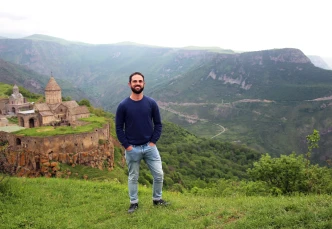
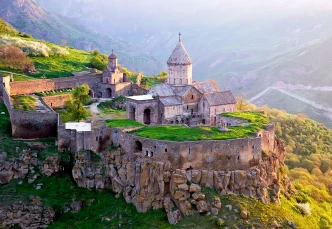
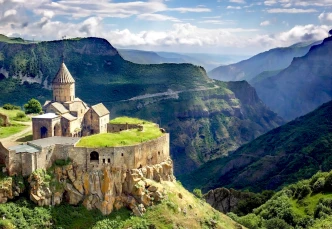
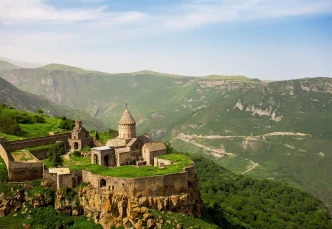
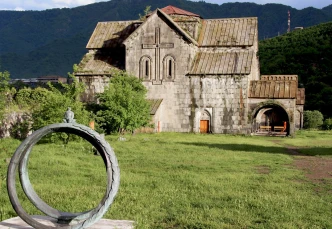
Amid the rugged ridges of Zangezur, high above deep gorges and winding mountain roads, rises the Tatev Monastery – an unrivaled masterpiece of medieval Armenian architecture. Founded in the 9th century on the site of an ancient pagan sanctuary, it became both the spiritual and political heart of the Syunik principality. Perched on the very edge of a cliff, its stone walls merge seamlessly with the mountain massif, while its strategic position made it nearly unreachable for enemies.
In troubled times, the monastery transformed into a fortress, shielded by powerful defenses that guarded not only the lives of the monks but also the treasures of the land. Hidden chambers and underground passages linked the monastery to the outside world, allowing it to withstand sieges. Legends say these secret routes safeguarded relics and manuscripts whenever danger loomed.
Tatev was a place where the undying light of faith intertwined with wisdom and political influence, where its walls echoed both prayers and decisions that shaped the destiny of Syunik.
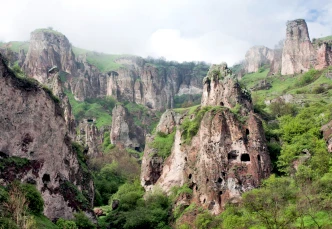
Outside the monastery complex, but within the rocky gorge of the Vorotan river, there are other monasteries and churches that were destroyed during the 1931 Zangezur earthquake. All of this is given a special charm by the Devil's Bridge and the Grand Hermitage of Syunik, located deep in the canyon, at the very bottom of the gorge. The latter was connected to Tatev Monastery by an underground passage more than half a kilometer long, which was also damaged by the earthquake and filled with stones.